Free Ebook Introduction to C# Using .NETBy Robert J. Oberg
Those are several of benefits reviewing Introduction To C# Using .NETBy Robert J. Oberg When you have actually made a decision to get and review the book, you need to allot the formulation and obtain the freely to read up until completed. This publication tends to be a required book to need some obligations as well as activities. When other people are still bothered with the jobs as well as target date, you could really feel a lot more unwinded since you have actually got the book flawlessly.
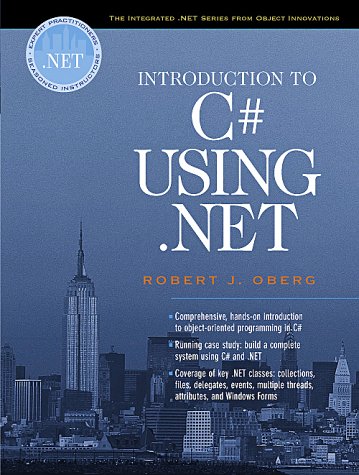
Introduction to C# Using .NETBy Robert J. Oberg

Free Ebook Introduction to C# Using .NETBy Robert J. Oberg
Welcome to our stunning website. This is a site that could make everybody really feel so eased. This is the one that will give all completed book collections from the authors all over the world. Locating guide from other nations in this rest is very easy, additionally to locate guides for within the country. That will be so easy then.
Lots of obligations in this recent period need the book not just from the most recent publication, yet additionally from the old book collections. Why not? We offer you all collections from the earliest to the newest publications worldwide collections. So, it is extremely completed. When you really feel that guide that you have is actually publication that you want to review now, it's so pleasured. But, we truly suggest you to review Introduction To C# Using .NETBy Robert J. Oberg for your own need.
The Introduction To C# Using .NETBy Robert J. Oberg will certainly likewise plant you excellent way to reach your suitable. When it comes to life for you, you can review it in your leisure. Why do not you try it? In fact, you will not know how specifically this book will certainly be, unless you review. Although you don't have much time to finish this publication promptly, it actually doesn't need to complete hurriedly. Select your precious leisure time to utilize to read this book.
Based on the Introduction To C# Using .NETBy Robert J. Oberg specifics that we offer, you might not be so baffled to be below as well as to be participant. Obtain now the soft file of this book Introduction To C# Using .NETBy Robert J. Oberg and also wait to be all yours. You conserving could lead you to evoke the simplicity of you in reading this book Introduction To C# Using .NETBy Robert J. Oberg Even this is types of soft documents. You could really make better possibility to get this Introduction To C# Using .NETBy Robert J. Oberg as the suggested book to read.
Get results with C#, with the hands-on C# introduction based on proven development experience from an expert practictioner. With Introduction to C# Using .NET, you'll learn C# object-oriented development step-by-step, by constructing a complete .NET "travel agency" system! Seasoned .NET instructor Robert J. Oberg covers key .NET database, Web, XML, and user interface classes -- plus collections, delegates, events, multithreading, attributes, and much more!
- Amazon Sales Rank: #2141467 in Books
- Published on: 2001-10-19
- Original language: English
- Number of items: 1
- Dimensions: 9.00" h x 1.10" w x 6.90" l, 1.65 pounds
- Binding: Paperback
- 480 pages
From the Back Cover
C# hands-on. Your complete, step-by-step introduction to C# development for .NET.
- Comprehensive, hands-on introduction to object-oriented programming in C#
- Running case study: build a complete system using C# and .NET
- Coverage of key .NET classes: collections, files, delegates, events, multiple threads, attributes, and Windows Forms
Part of the Integrated .NET Book Series from Object Innovations.
Want to get results with C#? Get the example-rich, hands-on introduction to the C# language itself: Introduction to C# Using .NET. Leading .NET trainer and developer Robert J. Oberg teaches C# step-by-step, with a comprehensive banking system case study, that walks you through building a complete system. Oberg introduces C#'s advanced object-oriented capabilities early — helping you make the most of them to create software with unprecedented efficiency and power.
- In-depth introduction to C# object development — perfect for developers migrating from VB or COBOL
- Introductory material is clearly delineated in the first section so that more experienced programmers can jump right in to the new features of C#
- Covers the interactions between C# and the .NET Framework, giving developers a deep understanding of how .NET augments the features of the C# language
- Thorough treatment of interfaces and components
- Expert introduction to Windows Forms user interface programming
- Practical coverage of inheritance techniques, collections, delegates, events, multiple threads, and attributes
About the Author
DR. ROBERT J. OBERG is the founder and President of Object Innovations, a leading developer of integrated courseware on fundamental software technologies including Microsoft .NET, COM/DCOM/COM+, OLE, MFC, and Java. His books include Understanding and Programming COM+ (Prentice Hall PTR).
Excerpt. © Reprinted by permission. All rights reserved.
Preface
Microsoft's .NET is a revolutionary advance in programming technology that greatly simplifies application development and is a good match for the emerging paradigm of Web-based services as opposed to proprietary applications. Part of this technology is a new language, C#. This new language combines the power of C++ and the ease of development of Visual Basic(TM). It bears striking resemblance to Java(TM) and improves upon that language. C# may well become the dominant language for building applications on Microsoft(R) platforms.
This book is a practical introduction to programming in C# utilizing the services provided by .NET. This book emphasizes the C# language. It is part of the Prentice Hall/Object Innovations series of books on .NET technology.
This book is intended to be fully accessible to programmers who do not already have a strong background in object-oriented programming in C-like languages such as C++ or Java. It is ideal, for example, for Visual Basic or COBOL programmers who desire to learn C#. The book may also be read by more experienced programmers who desire a simple and concise introduction to C# with many example programs. It is structured so that more ex-perienced programmers can cleanly skip the material they already know. Although designed for working professionals, the book includes enough de-tail, careful explanations and sample programs so that it can be useful as a college textbook.
An important thrust of this book is to teach C# programming from an object-oriented perspective. It is often difficult for programmers trained originally in a procedural language to start "thinking in objects." This book introduces object-oriented concepts early, and C# is developed in a way that leverages its object-orientation. A banking system case study is used to illustrate creating a complete system using C# and .NET. Besides supporting traditional object-oriented features such as classes, inheritance, and polymorphism, C# introduces several additional features, such as properties, indexers, delegates, events, and interfaces that make C# a compelling language for developing object-oriented and component-based systems. This book provides thorough coverage of all these features.
C# as a language is elegant and powerful. But to fully utilize its ca-pabilities you need to have a good understanding of how it works with the .NET Framework. The book explores several important interactions between C# and the .NET Framework, and it includes an introduction to major classes for collections, files, threads, and user interface.
ORGANIZATIONThe book is organized into four major parts and is structured in a manner to make it easy for you to navigate to what you most need to know. Part 1, which should be read by everyone, begins with an introduction to the .NET Framework, which is the underpinning for all applications and services in the .NET environment. Next comes a short introduction to hands-on pro-gramming using C#, so that you can start writing code on .NET right away. The third chapter introduces Visual Studio.NET, the latest incarnation of Microsoft's popular Visual Studio development environment. The new Visual Studio has many features that make application development easier and more pleasant. You will be equipped to use Visual Studio throughout the rest of the book.
Part 2 covers the C-like features of C#, which are shared by C, C++, Java, and various scripting languages. Thus, if you know any of these C-like languages, you will have a definite leg up in learning C#, and you can quickly skim this section, paying attention to the information in the side-bars. A sidebar will alert you the first time a concept new to C# is intro-duced. Then you will know to look for further elaborations where they occur later. If you are not familiar with C or a similar language, this section is for you. It will quickly bring you up to speed on the core topics of data types, operators, and control structures.
Part 3 is the core of the book, systematically covering the features of the C# programming language that go beyond C. The object-oriented features of C# are covered gradually and thoroughly, making this part of the book accessible to readers without OOP background. A case study is used, illustrating how the object-oriented features of C# work in combination. This case study is progressively built from Chapters 12 through 18. The C# data types, based on the .NET Common Type System, are explored in detail. We cover features new in C# such as properties and indexers. We cover prac-tical issues of formatting and conversions, and we discuss the important topic of exceptions. We conclude this part with a study of interfaces, which provide a better level of abstraction in expressing system functionality.
Part 4 explores thoroughly the relationships between C# and the .NET Framework and introduces some important .NET services. We introduce collections, which generalize arrays, and we examine fundamental operations such as copying and comparing objects. In .NET, interfaces are provided for such basic operations, which makes for a very flexible architecture, as different classes can implement these interfaces in a manner appropriate for them. The .NET Framework provides a very flexible callback mechanism, known as delegates, which has many applications. Delegates are the foundation of events, and they are also used in starting threads. We look at directories and files, multiple thread programming, and attributes. Attributes are a powerful mechanism in .NET, enabling the programmer to accomplish tasks declaratively, with writing little or no code. You can implement your own custom attributes in C#. You can read information about custom attributes, or any other metadata, by a mechanism known as "reflection." C# permits you to code at a lower level by writing "unsafe" code, which can help you interoperate with legacy code. The book concludes with introductions to components and to Windows programming.
SAMPLE PROGRAMSThe only way to really learn a programming language is to read and write many, many programs, including some of reasonable size. This book provides many small programs that illustrate pertinent features of C# in iso-lation, where they are easy to understand. The programs are clearly labeled in the text, and they can all be found in the software distribution that ac-companies this book. Directions for downloading the software are given be-low.
There is also a major case study, that is progressively developed in Chapters 12 through 18. This case study illustrates many features of C# working together in combination, as they would in a practical application. A special point is made of demonstrating the object-oriented features of C#. If you are new to OO, studying the case study is a must!
The sample programs are provided in a self-extracting file. When ex-panded, a directory structure is created rooted in c:\OI\CSharp. The sample programs are in directories Chap1, Chap2, etc. All the samples for a given chapter are in individual folders within the chapter directories. The names of the folders are clearly identified in the text. Each chapter that contains a step of the case study has a folder CaseStudy containing that step.
This book is part of the Integrated .NET Series from Object Innovations and Prentice Hall PTR series. The sample programs for other books in the series are located in their own directory underneath c:\OI, so all the .NET examples from all books in the series will be located in a common area as you install them.
EXERCISESAlthough exercises are not provided in the book itself, a comprehensive set of exercises is available for download from our website.
WEBSITEThe website for the Integrated .NET Series from Object Innovations and Prentice Hall PTR series is:www.objectinnovations.com/dotnet.htmA link is provided at that website for downloading the sample programs.
Introduction to C# Using .NETBy Robert J. Oberg PDF
Introduction to C# Using .NETBy Robert J. Oberg EPub
Introduction to C# Using .NETBy Robert J. Oberg Doc
Introduction to C# Using .NETBy Robert J. Oberg iBooks
Introduction to C# Using .NETBy Robert J. Oberg rtf
Introduction to C# Using .NETBy Robert J. Oberg Mobipocket
Introduction to C# Using .NETBy Robert J. Oberg Kindle


0 comments:
Post a Comment